Turkey for Christmas

December 24, 2025 Shana Smith Question: What do belly dancing, Santa Claus, and Christmas dinner all have in common? Answer: Turkey! The country that is, not the bird, though the fact that eating turkey for Christmas is a global tradition, even in the country of Türkiye (traditional spelling). The country of Turkey also boasts a form of belly dance that is distinctive from its Egyptian and Lebanese counterparts, although many belly dancers today perform a fusion of the styles. If you’ve seen dancers play the zils (finger cymbals), drop to their knees and extend into a full backbend, or wear bead- or coin-adorned costumes that reveal lots of torso and leg, you can thank the influence of the Turkish form. While the trademark shimmy is an Egyptian style, Turkish belly dancing–also known as ciftetelli–is more flamboyant and energetic, with hair tosses, hip gyrations, hip lifts, kicks, twirls, and leaps not withheld. Another unique Turkish contribution to the global belly dance we enjoy today is the karshilama, or 9/8 time folk dance that is often incorporated into popular routines. Also, while all forms of belly dance are open to men and women alike, Turkish belly dance has historically featured the most male dancers. One day last December, during a mainstage rehearsal featuring Hip Expressions belly dancers and live music with the world music band “Kafkasso,” dancers were preparing for a lavish holiday show featuring many of the dance forms described above. During a break, Turkish-born band leader and lead guitarist Daryal Kafkasso blurted out: “You know guys, Santa Claus was Turkish!” His exclamation brought out immediate laughter, as most everyone assumed that Daryal–who is a constant jokester–was just pulling our legs. Santa Claus? Christmas? These December trademarks are long associated with European traditions and the Christian religion, not the Middle Eastern and mainly Muslim nation of Turkey. But in fact, Saint Nicholas, the original name for Santa Claus, was indeed from Turkey, and many of the qualities we associate with the jolly man are historically accurate representations of this very real Turkish philanthropist and Christian bishop. Saint Nicholas was born in the third century in the city of Myra in Antalya Turkey during the height of the Roman Empire and lived there for his entire life. Many stories from various sources depict him as a generous gift-giver who would pour coins down the chimneys of poor households, where they would land in socks (stockings) hanging from the mantle to dry. He displayed a particular generosity towards those who chose to be kind, hardworking, and unselfish despite poor circumstances. While his actions were based in his devout Christian faith, these universal human qualities of compassion and giving intersect all faiths and belief systems. As such St. Nicholas is still acknowledged in Turkey, especially on the New Year. Some people even dress up like Santa Claus as a way to celebrate a new beginning and making better choices for the year ahead. So could Mr. and Mrs. Claus have been belly dancers? Maybe they danced, but we don’t find records of belly dance as a recognized art form in Turkey until the Ottoman Empire in the 14th century, one thousand years after St. Nicholas’s time. In fact, there might not have been a Mrs. Claus at all! Although the Eastern Catholic Rite allows married men to be ordained into the priesthood, only unmarried priests can become bishops. Nonetheless, considering St. Nicholas’s Turkish origins, the conjoining of Middle Eastern belly dance and Christmas makes a lot of sense, and is a great reminder that humanity shares more in common than we might realize. Dancing is a great example of this thread of our shared origins, and one that can continue well into the future. During this holiday season, when the world is steeped in needless division, this expression of our shared humanity is more important than ever. Sources: Saint Nicholas: Biography, Patron Saint, Feast Day & Santa Christmas In Turkey 2024- How To Enjoy A Turkish Christmas (chasingthedonkey.com) Christmas in Turkey: Full Guide to Turkish Christmas Traditions (unilandtours.com) Belly dance in Turkey, Historical Roots and the Role of Men – BrightHub Education Turkey Belly Dance: A look into this unique style of dance (2023) (theartoflivinginturkey.com)
Starting a Movement
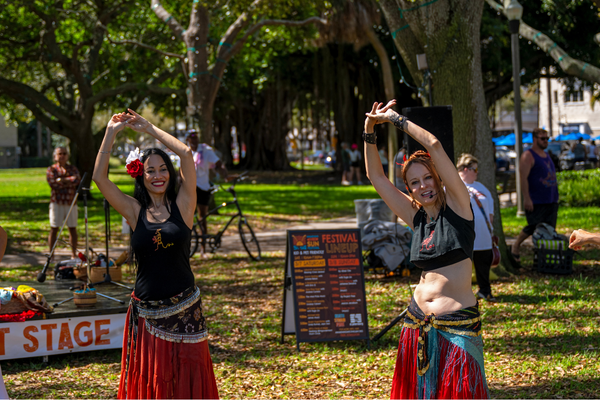
November 1, 2025 Shana Smith In today’s society, the standards we are bombarded with can seem impossibly high. One hour of television or internet consumption will yield an average of twenty-three minutes of advertisements that show attractive, healthy, young, slim people living their best lives with seemingly minimal effort. This model contrasts the reality of any given day in the ordinary adult in America, when the sound of the alarm (often after too little or low-quality sleep) can begin the first of a series of physical, mental, and emotional challenges that, while very valid and a normal part of the human route, create the illusion that “everyone has it all together except for me.” The result can be a “why bother?” attitude: when the rest of the world appears to be happily running a metaphorical (or actual) marathon, it’s hard to even get out of bed. America has thus become the land of the sedentary, home of the couch potato, substrate of the barely-making it, and island of the lone wolf, with many suffering from unspoken feelings of disconnection and loneliness. There is a simple solution, and it doesn’t involve setting rigid parameters designed to achieve unrealistic standards. It’s called MOVING. Like the old adage, “the journey of one thousand miles begins with a single step,” we can start plugging into health and happiness immediately by simply by moving our bodies. Feeling blue? Move! Tired? Move! Achey? Move! Ate too much stuffing for Thanksgiving? Move! Got an overwhelming to-do list? Move! A marathon is not required. As my mother always says: “Life is a cinch by the inch, but hard by the yard.” Harvard Health advises us that most Americans spend at least half of their days sitting, which is a primary cause for chronic inflammation and the many diseases that stem from it, as well as obesity and depression. By contrast, regular bouts of movement throughout each day such as a short walk, stretching, dancing, and other simple and accessible movements have immediate physiological and mental benefits, to wit: increasing heart health and circulation, elevating mood, moving lymphatic fluid, building bone mass, increasing sex drive, lowering cholesterol and blood pressure, increasing energy, and promoting better sleep, to name just a few. While any bit of movement is good for us, we can magnify its benefits by setting the intention for self-love. Too often, we live in a subtle but all-too-debilitating state of lack, of “I’m not enough.” Enter the power of intention. Even if we don’t feel it, “fake it till we make it” actually works; by giving ourselves permission to care for ourselves in small and large ways on a daily or even moment-by-moment basis, self-compassion takes form and does its healing work. And for those of us raised to believe that self-love is selfish or even narcissistic, take note: everyone around you benefits when you take care of yourself. Not only can you inspire others by taking these small but meaningful steps (pun intended) towards personal nourishment and happiness, but self-compassion always translates to general compassion, and you end up being in much better shape to more easefully take care of and support others around you. A win-win! Belly dancing is a particularly effective way to move with self-love, as it hones in on the power of subtle movement and mindful attention to the beauty and wonder of our bodies exactly as they are. There is no impossible standard to meet, as all bodies, all ethnicities, all socioeconomic levels, all ages and all life stages are accepted and celebrated in this timeless art form. Available to people who identify as non-binary, male, or female alike, belly dancing is nonetheless an expression of the divine feminine, which is present in all genders and embodies the qualities of unconditional nurturing, support, sensuality, and acceptance. And because it is often done in community, it fosters a sense of immediate connection with others, regardless of ability level. The dance community also includes musicians, audience members, and even blog writers like myself: one moving organism of familial support and inclusion. Each small act of intentional movement is also a small act of self-compassion that is cumulative. If we can redirect our focus from the seemingly impossible task of achieving media-hyped standards and just take it one day, one step, one hip shake and shoulder roll at a time, we may discover that the secret to happiness, health, and self-fulfillment has been with us all along. Author’s addendum: apropos to the “movement” theme, Hip Expressions has moved to an incredible new location at 1045 9th Avenue North, St. Petersburg FL, 33701! Come join us! Sources: Here’s How Much Time You’re Wasting Watching Streaming Ads (howtogeek.com) Why you should move — even just a little — throughout the day – Harvard Health The importance of movement – Mayo Clinic Health System 5 Benefits of Moving Your Body Every Day | Chopra
Rhythm’s Gonna Get You!
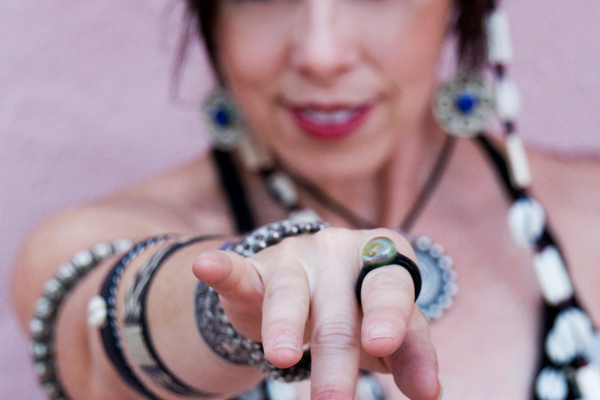
May 7, 2025 Shana Smith The Marriage of Global Music and Dance Whether you dance or not, we all know that three-dimensional feeling we get when we hear music from a live band versus the two-dimensional blare played through speakers: the experience of receiving the music at the very moment it is being created is organic and deeply personal. Suddenly, the listener is fully immersed in the creation of sound, melody, and rhythm as it is actually happening. The whole body feels the vibrations, and the effect is organic and can even be transcendent. Why would people pay money and travel to see live performances of their favorite bands, when they can just listen at home? Here is a personal example: For decades, this blogger listened to Cher and knew all of her songs by heart. But the moment I saw her onstage from the third row, the effect was so intimate that tears flowed freely, and I could not stop dancing. The effect of live music is not lost to the dancer. Likewise, musicians can not only play off of each other in a live setting; they can also improvise with and reflect the expression of the dancers. While many performances–from children’s dance recitals to professional performing arts center productions–feature beautiful choreography, costumes, and lighting with pre-recorded music, a dance production set to live music or a live concert with dancers has an organic feel that can have a significant positive impact on the audience, dancers, and musicians alike. In the international dance and music worlds, this effect is well documented. A study done in 2018 indicated that head movements by concert-goers were markedly greater than those listening to a recorded version of the same music. A Berkeley paper showed that musicians, dancers, and audience members alike find that being together in the same space and sharing the same moments of real-time expression results a sense of connection that is significantly bonding. Traditional music and dance were, across the world, created as a way to bring a community together, to express emotions in times of celebration or hardship through the merging of movement, melody, and rhythm. According to the National Institutes of Health: “Conjoining music, dance and ritual language within an event that addresses the existential concerns of the community is the most universally valued of musical activities. Owing to the entrainment of human bodies in a group, a musical event that is a ceremony or a ritual… necessarily becomes an enhancer of community spirit.” On Sunday, May 21, the World Music band Kafkasso will be joining with Hip Expressions dancers from many traditions to present “The Art of Danse Orientale.” This blogger had the opportunity to interview some of the performers and ask them the following prompt: “How do the elements of melody, rhythm, and dance merge? What special meaning does this combination of elements mean for you?” Here’s what they shared: “Rhythm, melody, and dance are all vital expressions of the same vibrant, living, breathing, evolving organism like the roots, trunk, and leaves of an awe inspiring and magnificent tree.” –Raihan Alam, World Percussionist and Didgeridoo Player “For me melody, rhythm and dance are the perfect combination to create a space in time of pure magic and magnetism, a non-verbal communication that is understood by all no matter the cultural background or spoken language. Is the expression of the soul through movement and music.” –Vanessa Cerallo, International Flamenco Dancer “Rhythms, melodies and, vibrations are the essential pillars of universal language and, the existence of any living being . Once these elements are combined in harmony within space and time expressions of poetry in motion are created . A dancer consumes all the sounds of these elements to be the conductor and orchestrator of patterns , emotions and expressions in a physical form in order to present it as a visual treat to the audience.” –Ali Amidi, World Percussionist “Melody, rhythm, and dance mean a perfect combination of, soul, texture, and passion. They complement each other creating magic. A magic that moves people. A magic that makes people closer.” –Omaris Saneaux, International Belly Dancer Come and experience the magic of rhythm, melody and movement for yourself this Sunday, May 21 at the Palladium Theater in St. Petersburg: https://mypalladium.org/events/kafkasso-show
Fired Up to Dance!
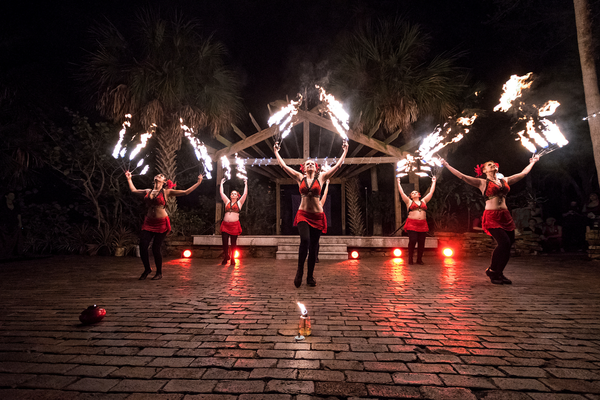
January 10, 2025 12:30pm Shana Smith Our Fundamental Elements Movement. Connection. Health. Motivation. Inspiration. Expression. Contentment. Ask almost any average person what they could use more of to counterbalance their busy lives, and you are likely to get a response that includes many of these basic constituents. Ani, an administrative assistant who lives in Seminole, Florida, set a New Year’s resolution as follows: “I sit all day long, and work mainly alone. I long to move more and to connect with other people.” Raj, an in-demand heart surgeon in Tampa, states that he’s lost his inner fire: “I do my job well and I do it constantly. I know it’s important and for many years it gave me a great sense of purpose, but I’ve lost my motivation, which was the thing that inspired me to be a healer in the first place.” Indeed, movement, connection, and the inspiration to motivate our purpose are integral to our health and well-being, but our society tends to emphasize overwork and stubborn independence over ease of spirit and connection with others. Over time, that fire that once made us so excited to learn, to connect, to build our lives and have meaningful careers tends to die down. If we listen closely, however, we can still hear the rhythm of our original self, the one who is reminding us that we are still meant to default to happiness. How? It’s that very yearning, expressed by Ani and Raj and–can you hear it?–you and me. That very sense that something is missing, and that call to move and connect and be inspired, are simply a collective invitation to return to our basic elements. Movement, flow, and expression represent the Water element. Connection and contentment are Earth; inspiration and motivation are Air. Fire, the final basic element of our existence, is the purveyor of our ultimate authentic state: Happiness. Fire symbolically burns what no longer serves us while simultaneously discovering that within each of us is endless fuel to keep us blazing brightly, Fire reminds us that we are radiant and alive. In the United States, and perhaps in answer to our uniquely overworked and more isolated American lifestyle, aided by the accessibility through YouTube and other social medias, there has been an increase in fascination with many styles of cultural dance from around the world. From more traditional Middle Eastern belly dance, the interest has expanded to other dance forms from Africa, France, India, Spain, and Central Asia, and plays with a variety of props from scarves and veils, swords, skirts, shawls, and Wings of Isis, among others. Tribal Burn Hip Expressions Dance Studio in St. Petersburg, Florida has added an exciting elemental prop that has its origins in Polynesian dance along with other traditions: Fire. The dazzling combination of poi balls, fire fans with culturally inspired dance and music creates a compelling presentation that Johanna Zenobia, director of Hip Expressions, and Karen Sun Ray, Show Director, call “Tribal Burn.” – It started as a way to integrate the new evolution of dance and creativity by adding blazing implements to fuel the dancer’s creativity. It also serves to remind us of our basic elements, and to bring us home to our native ground of being. For both dancer and audience members alike, an immersive dance and fire experience can be a powerful conduit of self realization. According to Johanna Zenobia, director of Hip Expressions, “What is incredibly amazing is that fire dance has now been embraced by dancers all over the world, fusing modern technology to create fantastic fire dancing props that were not traditionally available. This means fire dance is both the evolution of dance into a world of complete creative license – at at the same time, a return to the very ancient, primal source of life: Fire.” On April 1, 2023, Hip Expressions will be presenting their Tribal Burn event, which has been an annual tradition for almost two decades and is now offered twice per year. This year’s spring theme is “April Fool’s Masquerade” and will be a true representation of the possibilities and creativity of dance fusion. There will also be a pre-show featuring a traditional Ukrainian bandura musician that is not to be missed! For several years now, they’ve chosen Sacred Lands as the venue; this choice is meaningful in that Sacred Lands is a not-for-profit Tocobogan mound preservation site and cultural awareness and education preserve in the middle of urban Pinellas County: a place for all of us to come home to our essential nature. The event can also be experienced virtually. In addition to a portion of the ticket sales to benefit Sacred Lands, 10% of profits will go to Danube International, a local 501c3 that supports local Ukrainian war refugees in the Tampa Bay area. More info and tickets can be found here: hip-expressions.com/showsevents Tap into your elements and get fired up to dance! Sources Fire Dancing: A Look At The History & Different Types (windstarcruises.com) Tribal and American tribal style invented by Carolena Nericcio. (worldbellydance.com)