
Turkey for Christmas

December 24, 2025 Shana Smith Question: What do belly dancing, Santa Claus, and Christmas dinner all have in common? Answer: Turkey! The country that is, not the bird, though the fact that eating turkey for Christmas is a global tradition, even in the country of Türkiye (traditional spelling). The country of Turkey also boasts a form of belly dance that is distinctive from its Egyptian and Lebanese counterparts, although many belly dancers today perform a fusion of the styles. If you’ve seen dancers play the zils (finger cymbals), drop to their knees and extend into a full backbend, or wear bead- or coin-adorned costumes that reveal lots of torso and leg, you can thank the influence of the Turkish form. While the trademark shimmy is an Egyptian style, Turkish belly dancing–also known as ciftetelli–is more flamboyant and energetic, with hair tosses, hip gyrations, hip lifts, kicks, twirls, and leaps not withheld. Another unique Turkish contribution to the global belly dance we enjoy today is the karshilama, or 9/8 time folk dance that is often incorporated into popular routines. Also, while all forms of belly dance are open to men and women alike, Turkish belly dance has historically featured the most male dancers. One day last December, during a mainstage rehearsal featuring Hip Expressions belly dancers and live music with the world music band “Kafkasso,” dancers were preparing for a lavish holiday show featuring many of the dance forms described above. During a break, Turkish-born band leader and lead guitarist Daryal Kafkasso blurted out: “You know guys, Santa Claus was Turkish!” His exclamation brought out immediate laughter, as most everyone assumed that Daryal–who is a constant jokester–was just pulling our legs. Santa Claus? Christmas? These December trademarks are long associated with European traditions and the Christian religion, not the Middle Eastern and mainly Muslim nation of Turkey. But in fact, Saint Nicholas, the original name for Santa Claus, was indeed from Turkey, and many of the qualities we associate with the jolly man are historically accurate representations of this very real Turkish philanthropist and Christian bishop. Saint Nicholas was born in the third century in the city of Myra in Antalya Turkey during the height of the Roman Empire and lived there for his entire life. Many stories from various sources depict him as a generous gift-giver who would pour coins down the chimneys of poor households, where they would land in socks (stockings) hanging from the mantle to dry. He displayed a particular generosity towards those who chose to be kind, hardworking, and unselfish despite poor circumstances. While his actions were based in his devout Christian faith, these universal human qualities of compassion and giving intersect all faiths and belief systems. As such St. Nicholas is still acknowledged in Turkey, especially on the New Year. Some people even dress up like Santa Claus as a way to celebrate a new beginning and making better choices for the year ahead. So could Mr. and Mrs. Claus have been belly dancers? Maybe they danced, but we don’t find records of belly dance as a recognized art form in Turkey until the Ottoman Empire in the 14th century, one thousand years after St. Nicholas’s time. In fact, there might not have been a Mrs. Claus at all! Although the Eastern Catholic Rite allows married men to be ordained into the priesthood, only unmarried priests can become bishops. Nonetheless, considering St. Nicholas’s Turkish origins, the conjoining of Middle Eastern belly dance and Christmas makes a lot of sense, and is a great reminder that humanity shares more in common than we might realize. Dancing is a great example of this thread of our shared origins, and one that can continue well into the future. During this holiday season, when the world is steeped in needless division, this expression of our shared humanity is more important than ever. Sources: Saint Nicholas: Biography, Patron Saint, Feast Day & Santa Christmas In Turkey 2024- How To Enjoy A Turkish Christmas (chasingthedonkey.com) Christmas in Turkey: Full Guide to Turkish Christmas Traditions (unilandtours.com) Belly dance in Turkey, Historical Roots and the Role of Men – BrightHub Education Turkey Belly Dance: A look into this unique style of dance (2023) (theartoflivinginturkey.com)
Starting a Movement
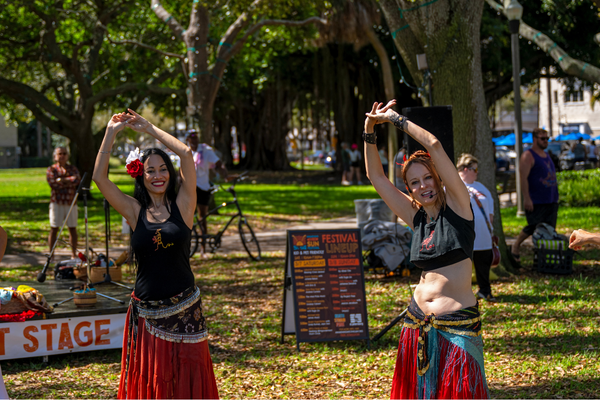
November 1, 2025 Shana Smith In today’s society, the standards we are bombarded with can seem impossibly high. One hour of television or internet consumption will yield an average of twenty-three minutes of advertisements that show attractive, healthy, young, slim people living their best lives with seemingly minimal effort. This model contrasts the reality of any given day in the ordinary adult in America, when the sound of the alarm (often after too little or low-quality sleep) can begin the first of a series of physical, mental, and emotional challenges that, while very valid and a normal part of the human route, create the illusion that “everyone has it all together except for me.” The result can be a “why bother?” attitude: when the rest of the world appears to be happily running a metaphorical (or actual) marathon, it’s hard to even get out of bed. America has thus become the land of the sedentary, home of the couch potato, substrate of the barely-making it, and island of the lone wolf, with many suffering from unspoken feelings of disconnection and loneliness. There is a simple solution, and it doesn’t involve setting rigid parameters designed to achieve unrealistic standards. It’s called MOVING. Like the old adage, “the journey of one thousand miles begins with a single step,” we can start plugging into health and happiness immediately by simply by moving our bodies. Feeling blue? Move! Tired? Move! Achey? Move! Ate too much stuffing for Thanksgiving? Move! Got an overwhelming to-do list? Move! A marathon is not required. As my mother always says: “Life is a cinch by the inch, but hard by the yard.” Harvard Health advises us that most Americans spend at least half of their days sitting, which is a primary cause for chronic inflammation and the many diseases that stem from it, as well as obesity and depression. By contrast, regular bouts of movement throughout each day such as a short walk, stretching, dancing, and other simple and accessible movements have immediate physiological and mental benefits, to wit: increasing heart health and circulation, elevating mood, moving lymphatic fluid, building bone mass, increasing sex drive, lowering cholesterol and blood pressure, increasing energy, and promoting better sleep, to name just a few. While any bit of movement is good for us, we can magnify its benefits by setting the intention for self-love. Too often, we live in a subtle but all-too-debilitating state of lack, of “I’m not enough.” Enter the power of intention. Even if we don’t feel it, “fake it till we make it” actually works; by giving ourselves permission to care for ourselves in small and large ways on a daily or even moment-by-moment basis, self-compassion takes form and does its healing work. And for those of us raised to believe that self-love is selfish or even narcissistic, take note: everyone around you benefits when you take care of yourself. Not only can you inspire others by taking these small but meaningful steps (pun intended) towards personal nourishment and happiness, but self-compassion always translates to general compassion, and you end up being in much better shape to more easefully take care of and support others around you. A win-win! Belly dancing is a particularly effective way to move with self-love, as it hones in on the power of subtle movement and mindful attention to the beauty and wonder of our bodies exactly as they are. There is no impossible standard to meet, as all bodies, all ethnicities, all socioeconomic levels, all ages and all life stages are accepted and celebrated in this timeless art form. Available to people who identify as non-binary, male, or female alike, belly dancing is nonetheless an expression of the divine feminine, which is present in all genders and embodies the qualities of unconditional nurturing, support, sensuality, and acceptance. And because it is often done in community, it fosters a sense of immediate connection with others, regardless of ability level. The dance community also includes musicians, audience members, and even blog writers like myself: one moving organism of familial support and inclusion. Each small act of intentional movement is also a small act of self-compassion that is cumulative. If we can redirect our focus from the seemingly impossible task of achieving media-hyped standards and just take it one day, one step, one hip shake and shoulder roll at a time, we may discover that the secret to happiness, health, and self-fulfillment has been with us all along. Author’s addendum: apropos to the “movement” theme, Hip Expressions has moved to an incredible new location at 1045 9th Avenue North, St. Petersburg FL, 33701! Come join us! Sources: Here’s How Much Time You’re Wasting Watching Streaming Ads (howtogeek.com) Why you should move — even just a little — throughout the day – Harvard Health The importance of movement – Mayo Clinic Health System 5 Benefits of Moving Your Body Every Day | Chopra
Belly Dancing is for Every Body
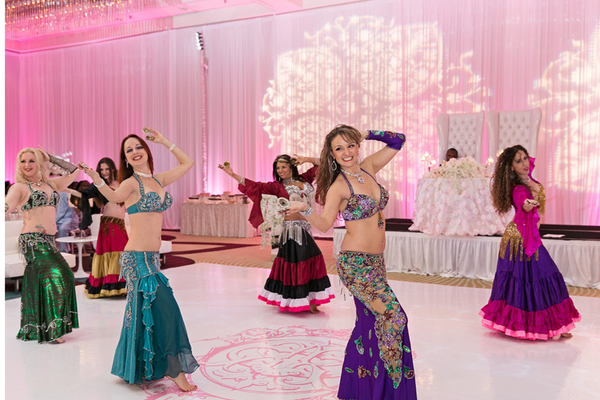
August 6, 2025 Shana Smith “Belly dancing is the way for the body to smile.” –Soheir Zaki, late 1960’s Just as there is no single face type required for a dazzling smile, neither is there a specific body type required for the timeless art of belly dancing. Nonetheless, many people admire the art of oriental (belly) dance from afar, never actually thinking that could be accessible to or for them. The reasons are many: “I’m too skinny.” “I’m overweight.” “I’m not pretty enough.” “I would be too self-conscious wearing those costumes in public.” “I can’t keep a beat, no less shake my hips to one.” “I could never be as good as the dancers I see on stage.” “I’m too old.” “I’m not graceful.” The list continues. This tendency can be even more amplified in men, who may mistakenly believe that the beauty of this art form is reserved for women only, and that societal conditioning requires them to keep any personal interest in dancing to themselves. In fact, it was iconic male Indian belly dancer Esahn Hilal who famously clarified the accessibility of this dance form to anyone who might even have the slightest spark of interest, as follows: “Belly dancing taught me that there is no perfect body, size, or colour. It taught me to accept myself and it has taught me that I am beautiful the way I am.” Medical Daily recently described an Australian study that showed that belly dancers have a statistically significant positive body image. According to the study: “Belly dancing is an activity associated with positive body image, because participants tend to focus less on their external appearance, and more on the experience and what they are able to do with their bodies.” Similarly, a 2010 study in the Journal of Gender Studies reports that “While research on various forms of dance has emphasized unhealthy body image influences, belly dance offers a counter-example, indicating broad and inclusive body image norms, lack of pressure for body image conformity, and high levels of body satisfaction among dancers.” Along with body image, another very common misconception about belly dancing is that is strictly for younger people, and that any latent interest in being a dancer is “too late.” In fact, there are many advantages to starting your belly dancing journey in your 40’s, 50’s, 60’s, 70’s, 80’s, and beyond! First of all, it’s great exercise, and the key to aging with vitality is to keep moving. Best of all, unlike some other forms of dance, belly dancing is low impact and hence easier on the joints. Second, belly dancing is a great place to flaunt the sexiness, sauciness, and personal power that can only come with age; this gives the older dancer an edge that younger dancers simply haven’t earned yet. As the old adage goes: “if you’ve got it, flaunt it!” So, if you have even an inkling of wanting to belly dance, listen to it. You might find that the hardest part is simply letting your self-doubt keep you from going to your first class; wrap yourself up in self-compassion and go anyway. If you can take Hilal’s quote as an invitation to bring not only yourself but also all of your self-proclaimed awkwardness, heaviness, skinniness, tone-deafness, general unworthiness, or whatever other judgmental labels you’ve assigned to yourself, you will likely find that those labels naturally dissolve away once the music begins, and you can lose yourself to this age-old art form that literally celebrates the human body and its beautiful capacity for emotion and expression, exactly the way it is. Thought you were too heavy? Lose yourself to the celebration of curves and shimmies, to the voluptuousness capacity of movement. Thought you were too bony? Marvel at how movement and music soften you, how hip scarves find shape you didn’t even know you had. Too awkward? Twirl with a gossamer veil, and enchant yourself. Unable to hold a beat? Learn technique and how to follow the music. For every perceived personal obstacle, belly dancing has a solvent. Whether you just want to have fun and learn some general techniques to simply start dancing or follow a more rigorous path of becoming a professional dance artist (more on these two pathways next blog), allow yourself the honor of your presence, exactly the way you are! Sources: Inside the World of Istanbul’s Male Belly Dancers | Arts & Culture| Smithsonian Magazine How India’s first male professional belly dancer, Eshan Hilal, overcame prejudice to become a star | South China Morning Post (scmp.com) Belly Dance Your Way To A More Positive Body Image (medicaldaily.com) Body image in belly dance: Integrating alternative norms into collective identity | Request PDF (researchgate.net) Why You’re Never Too Old to Belly Dance – The Purple Veil (wordpress.com)