Turkey for Christmas

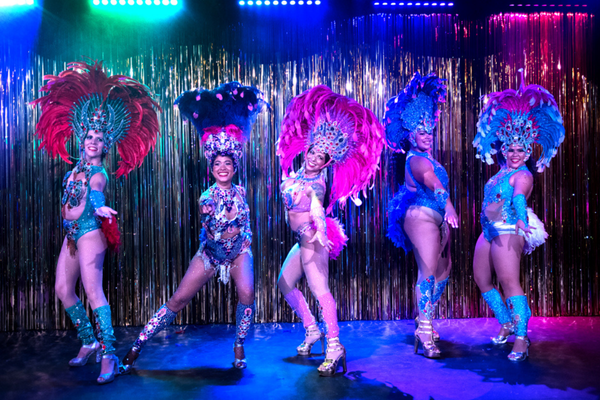
December 24, 2025 Shana Smith Question: What do belly dancing, Santa Claus, and Christmas dinner all have in common? Answer: Turkey! The country that is, not the bird, though the fact that eating turkey for Christmas is a global tradition, even in the country of Türkiye (traditional spelling). The country of Turkey also boasts a form of belly dance that is distinctive from its Egyptian and Lebanese counterparts, although many belly dancers today perform a fusion of the styles. If you’ve seen dancers play the zils (finger cymbals), drop to their knees and extend into a full backbend, or wear bead- or coin-adorned costumes that reveal lots of torso and leg, you can thank the influence of the Turkish form. While the trademark shimmy is an Egyptian style, Turkish belly dancing–also known as ciftetelli–is more flamboyant and energetic, with hair tosses, hip gyrations, hip lifts, kicks, twirls, and leaps not withheld. Another unique Turkish contribution to the global belly dance we enjoy today is the karshilama, or 9/8 time folk dance that is often incorporated into popular routines. Also, while all forms of belly dance are open to men and women alike, Turkish belly dance has historically featured the most male dancers. One day last December, during a mainstage rehearsal featuring Hip Expressions belly dancers and live music with the world music band “Kafkasso,” dancers were preparing for a lavish holiday show featuring many of the dance forms described above. During a break, Turkish-born band leader and lead guitarist Daryal Kafkasso blurted out: “You know guys, Santa Claus was Turkish!” His exclamation brought out immediate laughter, as most everyone assumed that Daryal–who is a constant jokester–was just pulling our legs. Santa Claus? Christmas? These December trademarks are long associated with European traditions and the Christian religion, not the Middle Eastern and mainly Muslim nation of Turkey. But in fact, Saint Nicholas, the original name for Santa Claus, was indeed from Turkey, and many of the qualities we associate with the jolly man are historically accurate representations of this very real Turkish philanthropist and Christian bishop. Saint Nicholas was born in the third century in the city of Myra in Antalya Turkey during the height of the Roman Empire and lived there for his entire life. Many stories from various sources depict him as a generous gift-giver who would pour coins down the chimneys of poor households, where they would land in socks (stockings) hanging from the mantle to dry. He displayed a particular generosity towards those who chose to be kind, hardworking, and unselfish despite poor circumstances. While his actions were based in his devout Christian faith, these universal human qualities of compassion and giving intersect all faiths and belief systems. As such St. Nicholas is still acknowledged in Turkey, especially on the New Year. Some people even dress up like Santa Claus as a way to celebrate a new beginning and making better choices for the year ahead. So could Mr. and Mrs. Claus have been belly dancers? Maybe they danced, but we don’t find records of belly dance as a recognized art form in Turkey until the Ottoman Empire in the 14th century, one thousand years after St. Nicholas’s time. In fact, there might not have been a Mrs. Claus at all! Although the Eastern Catholic Rite allows married men to be ordained into the priesthood, only unmarried priests can become bishops. Nonetheless, considering St. Nicholas’s Turkish origins, the conjoining of Middle Eastern belly dance and Christmas makes a lot of sense, and is a great reminder that humanity shares more in common than we might realize. Dancing is a great example of this thread of our shared origins, and one that can continue well into the future. During this holiday season, when the world is steeped in needless division, this expression of our shared humanity is more important than ever. Sources: Saint Nicholas: Biography, Patron Saint, Feast Day & Santa Christmas In Turkey 2024- How To Enjoy A Turkish Christmas (chasingthedonkey.com) Christmas in Turkey: Full Guide to Turkish Christmas Traditions (unilandtours.com) Belly dance in Turkey, Historical Roots and the Role of Men – BrightHub Education Turkey Belly Dance: A look into this unique style of dance (2023) (theartoflivinginturkey.com)

Rhythm’s Gonna Get You!

May 7, 2025 Shana Smith The Marriage of Global Music and Dance Whether you dance or not, we all know that three-dimensional feeling we get when we hear music from a live band versus the two-dimensional blare played through speakers: the experience of receiving the music at the very moment it is being created is organic and deeply personal. Suddenly, the listener is fully immersed in the creation of sound, melody, and rhythm as it is actually happening. The whole body feels the vibrations, and the effect is organic and can even be transcendent. Why would people pay money and travel to see live performances of their favorite bands, when they can just listen at home? Here is a personal example: For decades, this blogger listened to Cher and knew all of her songs by heart. But the moment I saw her onstage from the third row, the effect was so intimate that tears flowed freely, and I could not stop dancing. The effect of live music is not lost to the dancer. Likewise, musicians can not only play off of each other in a live setting; they can also improvise with and reflect the expression of the dancers. While many performances–from children’s dance recitals to professional performing arts center productions–feature beautiful choreography, costumes, and lighting with pre-recorded music, a dance production set to live music or a live concert with dancers has an organic feel that can have a significant positive impact on the audience, dancers, and musicians alike. In the international dance and music worlds, this effect is well documented. A study done in 2018 indicated that head movements by concert-goers were markedly greater than those listening to a recorded version of the same music. A Berkeley paper showed that musicians, dancers, and audience members alike find that being together in the same space and sharing the same moments of real-time expression results a sense of connection that is significantly bonding. Traditional music and dance were, across the world, created as a way to bring a community together, to express emotions in times of celebration or hardship through the merging of movement, melody, and rhythm. According to the National Institutes of Health: “Conjoining music, dance and ritual language within an event that addresses the existential concerns of the community is the most universally valued of musical activities. Owing to the entrainment of human bodies in a group, a musical event that is a ceremony or a ritual… necessarily becomes an enhancer of community spirit.” On Sunday, May 21, the World Music band Kafkasso will be joining with Hip Expressions dancers from many traditions to present “The Art of Danse Orientale.” This blogger had the opportunity to interview some of the performers and ask them the following prompt: “How do the elements of melody, rhythm, and dance merge? What special meaning does this combination of elements mean for you?” Here’s what they shared: “Rhythm, melody, and dance are all vital expressions of the same vibrant, living, breathing, evolving organism like the roots, trunk, and leaves of an awe inspiring and magnificent tree.” –Raihan Alam, World Percussionist and Didgeridoo Player “For me melody, rhythm and dance are the perfect combination to create a space in time of pure magic and magnetism, a non-verbal communication that is understood by all no matter the cultural background or spoken language. Is the expression of the soul through movement and music.” –Vanessa Cerallo, International Flamenco Dancer “Rhythms, melodies and, vibrations are the essential pillars of universal language and, the existence of any living being . Once these elements are combined in harmony within space and time expressions of poetry in motion are created . A dancer consumes all the sounds of these elements to be the conductor and orchestrator of patterns , emotions and expressions in a physical form in order to present it as a visual treat to the audience.” –Ali Amidi, World Percussionist “Melody, rhythm, and dance mean a perfect combination of, soul, texture, and passion. They complement each other creating magic. A magic that moves people. A magic that makes people closer.” –Omaris Saneaux, International Belly Dancer Come and experience the magic of rhythm, melody and movement for yourself this Sunday, May 21 at the Palladium Theater in St. Petersburg: https://mypalladium.org/events/kafkasso-show

Hafla Great Time!

March 5, 2025 Shana Smith The human inclination to party is timeless and universal. Early gatherings for purely social or celebratory reasons have been recorded around the world for thousands of years, usually for birthdays, harvests, and rites of passage. Music, rhythm, food and dancing have always been central to such gatherings and continue to be so today. In the belly dance world, the word “hafla,” حفلة, is common to both Arabic and Hebrew and is used to generally describe an array of gatherings that primarily involve dancing and music. Its direct translation is “party” or “celebration.” There are various types, from formal showcases to a combination of formal professional dancing and live music to an impromptu get-together of friends who simply enjoy dancing with live or recorded music. In recent times, the word has also taken on a meaningful connotation: that which represents the celebration and unity in diversity of the Middle East and beyond, so that communities may grow together versus apart. Johanna Zenobia, owner/director of Hip Expressions Dance Studio in St Petersburg, Florida, extends this diverse and community-building spirit to her haflas: “At Hip Ex, we like to distinguish between a hafla — a more casual party-like atmosphere where everyone is invited, like our First Fridays in downtown Gulfport— with a show or showcase, which is more formal and often curated, which we do not typically call a hafla. In our haflas, everyone is invited to perform or just dance for fun; just let us know you’re coming and what you’d like to do. We have a variety of dance forms, so even non-belly dancers can dance at a HipEx hafla: Polynesian, jazz, modern, Flamenco, etc. Our Tribal Burn and 1001 Nights Showcases, by comparison, are more formal and polished, in a staged performance setting. We sometimes pick themes and plan numbers that express the theme. For example, the spring Tribal Burn had a masquerade theme, and in the fall we’ll have Steampunk! While our 1001 Nights Show this year was in in a theater and is considered a showcase versus a hafla, we did invite folks up to dance during the intermission, so we do try to keep all our events fun and interactive.” Belly Dancers all over the world have created their own interpretations of what a hafla is, and the reasons for having a hafla have evolved with the times. For example, it is very common these days for haflas – or showcases – to be used as fundraisers for those in need. Hip Expressions’ “Tribal Burn” is a great example; Johanna is a first generation Ukrainian-American, and proceeds from recent ticket sales directly benefitted Ukrainian refugees. In addition to fire dancing, Johanna’s father –a Ukrainian bandora player–performed an opening set. Other reasons dancers may gather for a hafla is to practice their craft both in terms of technique and expression and offer a sense of community and non-judgmental support. What better way to integrate all of the aspects of dance class than in a hafla? Unlike other types of “classes,” the dance world is a community that derives great reward from growing together through getting together. This is particularly true in the belly dance world; hence, haflas are integral to anyone who has an interest or inclination to dance. Haflas are also wonderful ways to celebrate any holiday or occasion, from birthdays to retirement to community festivals. Regardless of the reasons and types of haflas, or you role as a dancer or spectator, one thing is certain: you will “hafla” great time! Sources: When Did People Start Celebrating Birthdays? (historynet.com) How to organise a Belly Dance Hafla event for charity or for fun. (worldbellydance.com) What does حفلة (hafla) mean in Arabic? (wordhippo.com) HAFLA – Celebrating the Middle East (islamicboard.com) #bellydance #bellydancer #hafla #showcase #show #community #hipexpressions #nonjudgement #bodypositive #dancecommunity #ilovestpete #traditions #bellydancetampabay #tampabaybellydance #keepitlocal #yourvibeattractsyourtribe #dancestudiolife

Every gathering a celebration.

We bring ancestral dance traditions from around the
world to create unforgettable moments at private
events or public celebrations.

Contact Us

HipExpressionsInfo@gmail.com

727-251-5241

Every gathering a celebration.

We bring ancestral dance traditions from around the world to create unforgettable moments at private events or public celebrations.

Learn

Contact Us

Info@Hip-Expressions.com

727-251-5241

© Hip Expressions 2004–2026. All rights reserved.

Saint Petersburg, FL · Inspiring community through dance since 2004